

Blast Proof David's Shield Claims Evaluated: 2026 Consumer Research Report Examining EMP Preparedness Planning, Grid Resilience Concerns, and Public Information About the BlastProof Guide Amid Recent U.S.-Iran Escalation
A 2026 consumer research report examining preparedness planning trends, publicly available information about the BlastProof: David's Shield guide, and the factors households researching EMP-related grid disruption scenarios may wish to verify independently.
New York City, NY, March 13, 2026 (GLOBE NEWSWIRE) -- Affiliate Disclosure: This article contains affiliate links. If you purchase through these links, a commission may be earned at no additional cost to you. This compensation does not influence the accuracy or integrity of the information presented. This article is for informational and educational purposes only and does not constitute professional emergency preparedness, legal, or medical advice.
Recent U.S. military action involving Iranian targets, together with official statements describing missile and drone escalation across the region, has renewed public discussion about household resilience, infrastructure vulnerability, and long-duration outage preparedness. This 2026 consumer research report examines publicly available information about BlastProof: David's Shield within that broader context of emergency planning and grid-disruption awareness.
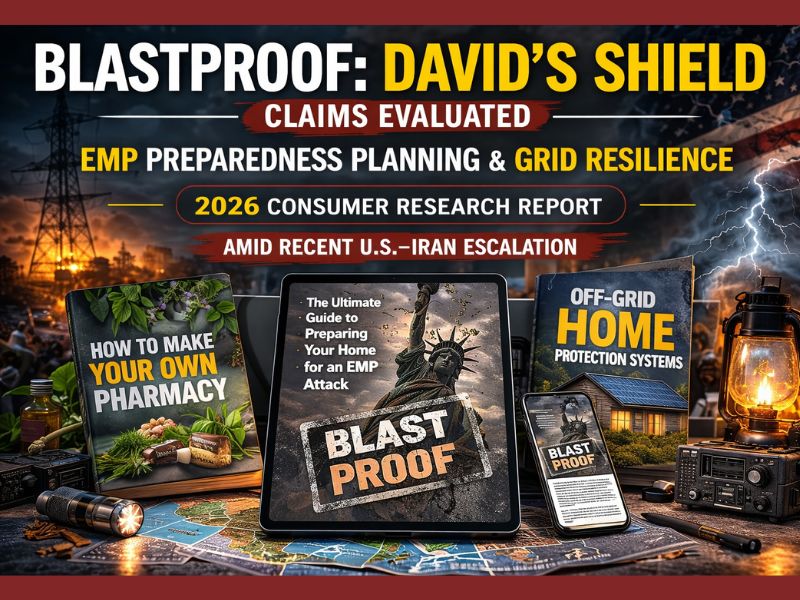
This article is a consumer research report examining what the company states about BlastProof: David's Shield, what publicly available preparedness guidance suggests households may wish to consider, and which details readers should verify independently before making any purchase decision.
View the current BlastProof: David's Shield offer (official BlastProof page)
Why EMP Preparedness Is Being Discussed More Heavily in 2026
For most American families, emergency planning has traditionally centered on natural disasters — the kind FEMA's Ready.gov guidance addresses: three days of food and water, a go-bag, a communication plan for the household. That baseline still applies. But a separate category of risk has been drawing increasing attention from national security researchers, infrastructure analysts, and everyday households alike: deliberate attacks on the electrical grid itself.
The electromagnetic pulse, or EMP, occupies a specific place in that conversation. It refers to a burst of electromagnetic energy — whether from a high-altitude nuclear detonation, a non-nuclear directed energy device, or a severe solar weather event — that can disable unprotected electronics across wide geographic areas at once. Unlike a conventional power outage, an EMP-caused disruption could damage the grid's own repair infrastructure, making restoration far more complicated and significantly extending outage timelines.
This is not speculative territory. The Congressional EMP Commission, a federally chartered body, issued formal reports to Congress in 2004 and 2008 documenting U.S. grid vulnerability to both natural and man-made electromagnetic events. FERC and related grid-security proceedings have long emphasized that targeted physical attacks on critical bulk-power infrastructure can create serious reliability and resilience concerns, including the potential for significant regional disruption.
The recent escalation of U.S.-Iran tensions — with documented military exchanges and official statements describing missile and drone activity in the region — has brought this infrastructure conversation to a wider audience. U.S. government cybersecurity agencies, including CISA, have published advisories describing Iranian cyber activity affecting organizations of interest and warning critical infrastructure entities to remain vigilant. That broader threat environment is part of what is driving renewed interest in household-level preparedness planning.
The question BlastProof: David's Shield is positioned to address is not a military one. It is a civilian household question: if utility infrastructure is disrupted for an extended period, what practical options does a family have that do not depend on electricity to function?
What Is BlastProof: David's Shield?
BlastProof: David's Shield is presented on its official website as a digital preparedness guide focused on EMP-related power-loss scenarios, off-grid household planning, and electricity-independent emergency methods. The company also describes supplementary materials relating to home protection and emergency self-reliance.
According to the company's published materials, the guide is authored under the name Henry Morris — disclosed on the company's own terms page as a pen name used for storytelling and privacy purposes — with content attributed to research conducted by a physicist named Charles Green, described as having studied practical off-grid methods within a traditional Amish community over an extended period.
The guide is marketed with explicit Christian and biblical framing, which may be relevant context for readers evaluating whether the product's presentation aligns with their preferences. The practical content the company describes — food preservation, water sourcing, off-grid heat, and home security without electronics — addresses concerns that apply across a range of household situations regardless of the reader's background.
The company states that BlastProof: David's Shield includes, at minimum:
- A core preparedness system addressing EMP-proofing approaches, off-grid energy options, food and medicine preservation methods, and water security
- Supplementary Report: Off-Grid Home Protection Systems, as described by the company
- Supplementary Report: Emergency natural medicine approaches, described by the company as covering preservation and use of household-accessible remedies
- Access to a members' support area, as described in the company's marketing materials
Readers should confirm current bundle inclusions, access format, and delivery details directly on the official page, as offerings can change over time.
What the Company States the Guide Covers
According to the brand's published marketing materials, the guide's content is organized around electricity-free preparedness methods drawn from Amish and traditional off-grid practices. What follows is a summary of content areas as described by the company. Readers should verify that specific content remains current in whatever version they access.
EMP protection approaches: The company describes DIY Faraday shielding methods using commonly available materials, positioned as lower-cost alternatives to commercial EMP-protection products.
Food and supply preservation: The company describes traditional off-grid food storage methods and also references approaches for managing temperature-sensitive supplies during outages. Readers with medications that require controlled storage conditions, including insulin, should consult a qualified healthcare provider before relying on any non-clinical guidance.
Water sourcing and filtration: The company describes methods for identifying and filtering water when municipal pumping systems are offline, including approaches intended for drought-affected regions.
Off-grid heat and light: The company describes approaches to maintaining warmth and light using non-electric tools and materials described as widely available and low in cost.
Home security without power: The company describes approaches to protecting a home when alarm systems, cameras, and digital communications infrastructure are offline — covering perimeter planning and what it frames as deterrent-based strategies.
Vehicle considerations: The company provides basic discussion of which vehicle types may be more or less affected by EMP-related electronic disruption, along with general mitigation considerations.
All of the above reflects what the company states about the guide's content. Independent verification of specific claims within the guide would require direct access to the material.
Why Grid Disruption Scenarios Continue to Draw Public Attention
The infrastructure preparedness conversation has moved steadily from specialist circles into mainstream awareness over the past decade, and several factors are driving that shift.
Government emergency planning language itself has evolved. FEMA's current public guidance recommends that households prepare for disruptions lasting well beyond the traditional 72-hour baseline — a reflection of updated assessments of how long restoration can realistically take following major disruption events. The agency's official planning resources now address scenarios involving extended outages, supply chain interruptions, and reduced emergency services capacity.
The U.S. Department of Homeland Security has publicly documented vulnerability assessments of the electrical grid. Industrial control system security — covering the systems that manage power generation and distribution — has been a standing priority in DHS cybersecurity reporting for years, with nation-state actors explicitly identified as threat categories.
At the household level, real-world extended outage events have given the conversation practical weight. The 2021 Texas grid failure left millions of people without power for days during severe cold weather, well beyond the standard emergency planning window for most affected households. Major storm-related outages across the Southeast and Northeast have produced similar experiences. Those events have pushed more families to think seriously about what it would actually mean to be without electricity for an extended period — and about how prepared they are for that scenario.
BlastProof: David's Shield sits within this broader public conversation about household grid resilience and electricity-independent emergency planning, a category that has grown alongside public awareness of the scenarios described above.
Key Preparedness Questions Households May Want to Consider
Regardless of which preparedness resource a household evaluates, the questions below reflect areas that official emergency management guidance consistently identifies as priorities for long-duration outage planning.
Water access: Municipal water systems depend on electrically powered pumping infrastructure. Households researching long-duration outage scenarios typically need to know how they would access, store, and purify water if those systems were offline for days or longer.
Food preservation: Refrigeration and freezer storage become liabilities within hours of a power outage rather than assets. Households with members who depend on refrigerated medications face an even more urgent version of this question.
Heat and light: In colder climates especially, maintaining warmth without electric heating is a safety issue, not just a comfort consideration. The same applies to light for safety and basic mobility during extended dark periods.
Medical needs: Households managing conditions that require insulin, refrigerated biologics, powered medical equipment, or consistent medication supplies face specific planning challenges that standard emergency guides do not always address in depth. Any planning in this area should involve a qualified healthcare provider.
Communications: Standard communication devices rely on charged batteries and functioning cell infrastructure. Long-duration outage planning typically considers what options remain available when both of those fail.
Home security: Extended outages have historically correlated with elevated rates of opportunistic property crime in affected areas. Households researching preparedness frequently include home security in their planning, particularly in scenarios where emergency response capacity is limited or delayed.
These are the kinds of questions that guides like BlastProof: David's Shield are positioned to address. Whether any specific guide addresses them adequately for a given household's needs is something readers should assess by reviewing the company's published materials and the guide's actual content directly.
What Readers Should Verify Independently
When evaluating any privately published preparedness resource, there are several areas where independent verification is worth doing before making a purchase decision.
Current content and format: The company describes BlastProof: David's Shield as available in digital format, with physical availability varying over time. Readers should confirm the current delivery format and access method directly on the official page before purchasing.
Bundle inclusions: Supplementary materials described in marketing can change. Confirm what is currently included in any purchase directly with the company.
Refund terms: The company's published policies describe a 60-day refund window. Readers should review the full return terms, process requirements, and any current conditions directly on the official website before purchasing, as policies can change.
Claims about specific methods: The guide describes specific preparedness approaches. Readers with medical needs — particularly those managing conditions requiring refrigerated medications — should discuss any changes to medication storage or emergency planning with a qualified healthcare provider before implementing guidance from any non-clinical source.
Legal considerations: Some preparedness activities, including certain water collection methods, home modifications, and security measures, may be subject to local regulations that vary by state and municipality. Readers should verify that any methods they plan to implement are consistent with applicable local laws.
Comparison with official guidance: Official emergency management resources from FEMA, DHS, and state emergency management agencies are publicly available at no cost. Any private preparedness guide should be evaluated alongside those official sources, not instead of them.
Pricing, Access Format, and Refund Terms as Described by the Company
According to pricing information published on the official website at the time of writing, BlastProof: David's Shield is listed at $67 for digital access, which the company describes as including the core guide, supplementary reports, and members' area access. Physical-format availability and any associated shipping charges are described separately when offered, and the company indicates that hard-copy availability may vary over time.
The company's published policies describe a 60-day refund window. Readers should review the full return terms, process requirements, and any current conditions directly on the official website before purchasing, as those policies can change.
Readers should confirm the latest pricing, delivery format, and terms directly on the official brand page before making any purchase decision.
View the current BlastProof: David's Shield offer (official BlastProof page)
Who This Type of Preparedness Resource May Interest
Consumer interest in EMP preparedness guides tends to cluster around several household profiles. What follows reflects patterns in who researches this category — not an endorsement of any specific purchase decision.
Households concerned about extended outage scenarios: Families who feel a 72-hour emergency kit does not reflect the full range of realistic disruption durations often research guides that address longer-horizon planning. The Texas grid failure of 2021, which extended well beyond the standard planning window for many affected households, brought broader public attention to this gap.
Faith-oriented households: The guide is marketed with explicit Christian and biblical framing, which may be relevant context for readers evaluating whether the product's presentation aligns with their preferences.
Households managing chronic medical conditions: The guide references approaches for managing temperature-sensitive supplies during outages, an area that many standard emergency guides leave underdeveloped. Households with members who rely on insulin or other refrigerated medications should confirm any relevant guidance with a healthcare provider before implementation.
Households in geographically exposed areas: Households near military installations, critical infrastructure, or major population centers may weigh the grid-disruption scenarios the guide addresses differently than households in lower-risk areas.
Budget-conscious preparedness researchers: The guide's emphasis on low-cost, non-electric methods described as derived from Amish practices may appeal to households that cannot invest in high-cost backup power systems, commercial survival gear, or large-scale food storage infrastructure.
Households where this type of resource may be less applicable: Households with established, comprehensive preparedness systems may find the content covers familiar ground. Readers who prefer peer-reviewed, academically cited emergency management research should expect a practitioner-focused presentation rather than an academic one. Those whose primary concern is short-duration outages addressed by standard FEMA guidance may find the guide's longer-horizon focus goes further than their planning needs require.
Final Research Summary
Public discussion of EMP preparedness, household grid resilience, and electricity-independent emergency planning has increased meaningfully in 2026, driven in part by recent U.S.-Iran military escalation and ongoing public attention to the vulnerability of civilian infrastructure to both physical and cyber threats. BlastProof: David's Shield is one privately published resource positioned within that broader conversation.
The company describes the guide as a knowledge-based framework for long-duration outage planning, drawing on off-grid methods attributed to Amish community practices and presented within a Christian preparedness context. The areas it covers — food and supply preservation, water sourcing, off-grid heat, home security, and EMP protection basics — correspond to recognized priorities in official long-duration outage planning guidance.
Whether the guide's specific content and approach fit any individual household depends on that household's current preparedness gaps, local conditions, medical needs, and whether the guide's approach aligns with the household's needs and circumstances.
The official website includes a promotional testimonials section, which readers should interpret in light of the site's own disclosures and standard results-vary considerations.
Readers evaluating BlastProof: David's Shield — or any privately published preparedness resource — should compare the company's claims with current guidance from FEMA, DHS, and their state emergency management agency, and should verify that any methods they plan to implement are consistent with their household's specific circumstances, applicable local laws, and relevant medical guidance.
Contact Information
For questions about BlastProof: David's Shield, according to the company's published contact information:
Email: support@getdavidsshield.com
Website: getdavidsshield.com
Order Support: https://www.clkbank.com/#!/
Phone (US): +1 800-390-6035
Phone (International): +1 208-345-4245
The company is operated by Direct Response SRL, as disclosed in the company's published terms and conditions.
For additional context on EMP preparedness planning and grid resilience research, readers may find this related report useful: BlastProof David's Shield Survival Guide — earlier consumer research coverage.
Disclaimers
Editorial Disclaimer: This article is a consumer research report for informational and educational purposes only. It does not constitute professional emergency preparedness, survivalist, legal, or medical advice. The information reflects publicly available details from the brand's official website and marketing materials. Always verify current terms, pricing, and availability directly with the company before making any purchasing decisions.
Results May Vary: Individual outcomes from using any preparedness guide depend on the reader's circumstances, implementation, local conditions, applicable laws, and many other variables. The information in this article describes the product as represented by the company and does not guarantee specific preparedness outcomes for any individual or household.
Medical Consideration: Any guidance relating to medication storage, medical supplies, or health-related emergency planning should be discussed with a qualified healthcare provider before implementation. This article does not constitute medical advice. Readers with specific medical needs — including those managing insulin-dependent or other medication-sensitive conditions — should consult their healthcare provider before making any changes to medication storage or emergency planning practices.
FTC Affiliate Disclosure: This article contains affiliate links. If you purchase through these links, a commission may be earned at no additional cost to you. This compensation does not influence the accuracy, neutrality, or integrity of the information presented. All descriptions are based on publicly available information from the brand's official website and marketing materials.
Pricing Disclaimer: All pricing, offer details, and guarantee terms mentioned were based on publicly available information at the time of publication (March 2026) and are subject to change without notice. Always verify current pricing and terms directly with the company before making any purchasing decisions.
Publisher Responsibility Disclaimer: The publisher of this article has made every effort to ensure accuracy at the time of publication based on publicly available information. We do not accept responsibility for errors, omissions, or outcomes resulting from the use of the information provided. Readers are encouraged to verify all details directly with the company and relevant emergency management professionals before making decisions.
Geopolitical Context Disclaimer: References to current geopolitical events reflect publicly available reporting and official government statements as of the publication date. These references are provided as context for consumer interest in emergency preparedness and do not constitute political commentary, foreign policy analysis, or predictions about future events. Readers should consult pr

Email: support@getdavidsshield.com

Legal Disclaimer:
EIN Presswire provides this news content "as is" without warranty of any kind. We do not accept any responsibility or liability for the accuracy, content, images, videos, licenses, completeness, legality, or reliability of the information contained in this article. If you have any complaints or copyright issues related to this article, kindly contact the author above.
