

Michael Calderin Tells Sanjay Puri on The CAIO Connect Podcast That AI Will Reward Problem Solvers, Not Replace Them

CAIO Connect Podcast
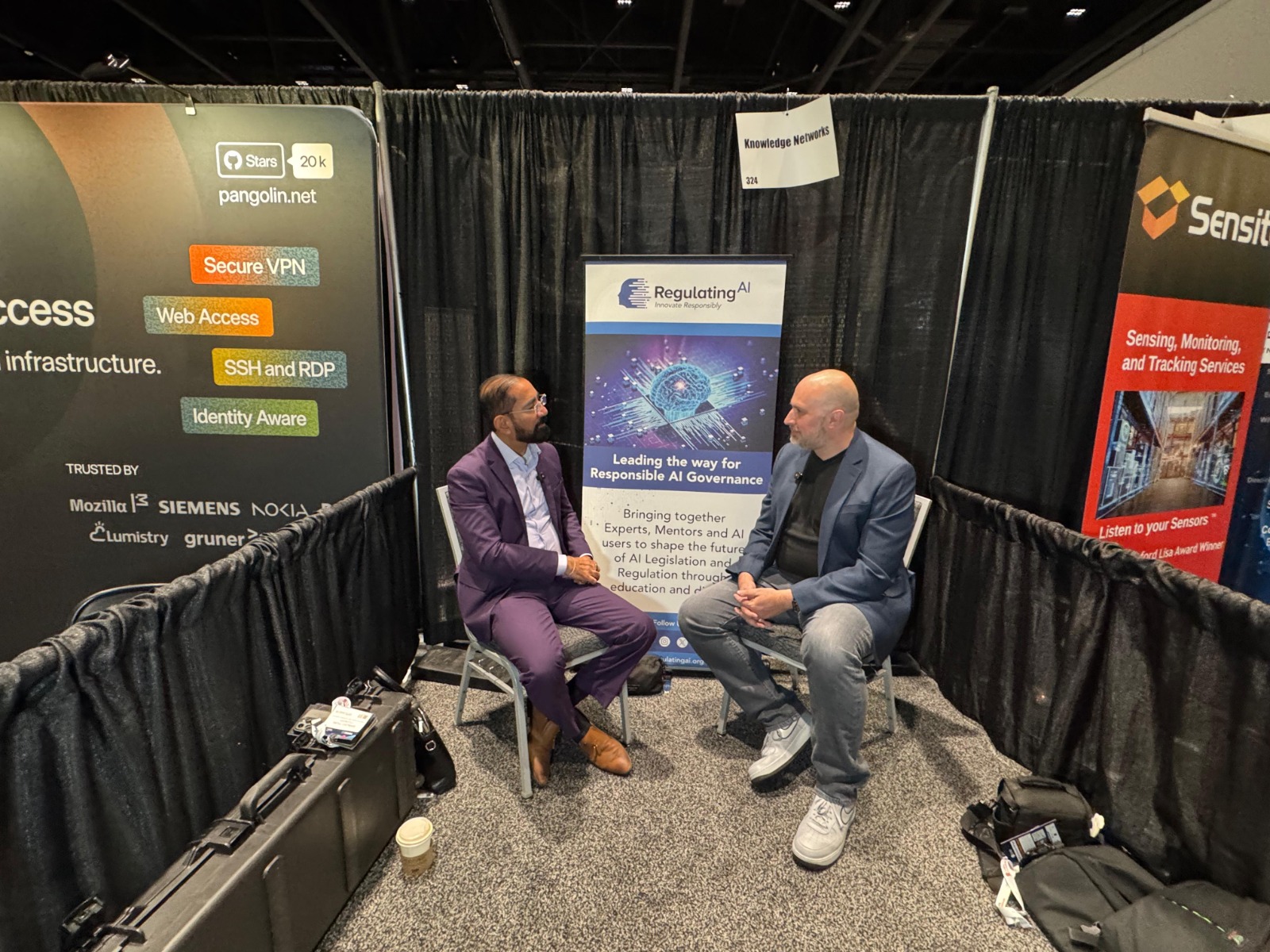
Michael Calderin, Chief Information Security Officer at Banzai Aerospace, with Sanjay Puri, President of CAIO Connect
Banzai Aerospace CISO Michael Calderin told Sanjay Puri on the CAIO Connect Podcast that AI will reward problem-solvers and reshape cybersecurity.
Communication’s critical for every role in cybersecurity.”
SAN JOSE, CA, UNITED STATES, May 21, 2026 /EINPresswire.com/ -- At TechEx inside the San Jose Convention Center, host Sanjay Puri welcomed Banzai Aerospace CISO Michael Calderin to the CAIO Connect Podcast for a wide-ranging conversation about AI, cybersecurity, manufacturing, and the future of work. Calderin, a 30-year veteran in IT and information security, explained how AI is reshaping security leadership and why companies now value critical thinking and communication as much as technical expertise. During the interview on the CAIO Connect Podcast, Calderin described his role as more than traditional cybersecurity leadership. He said modern CISOs must act as “chief trust officers” who help employees, customers, and partners trust the systems and products they use every day.— Michael Calderin
Calderin explained that AI did not create the changes in cybersecurity overnight, but it has accelerated them. He said organizations now give more employees access to tools that can build systems and automate work. As a result, security leaders must work closely with every department to manage risk and create a stronger culture of trust. The Banzai Aerospace executive also addressed growing concerns around generative AI threats, including prompt injections and rogue AI agents. He said every new technology brings new risks, but organizations must focus on using AI responsibly instead of avoiding it completely.
Calderin pointed to new AI-powered vulnerability discovery tools such as Anthropic’s Mythos project as an example of how AI can improve cybersecurity. However, he stressed that finding vulnerabilities is only part of the challenge. “What I want to see is using AI tools to repair those issues,” Calderin said on the CAIO Connect Podcast. He explained that companies still struggle to patch and manage the large number of existing vulnerabilities in their systems. According to Calderin, AI should help organizations automate mitigation, deploy patches safely, and validate fixes faster. The conversation also focused heavily on the relationship between CISOs and chief AI officers. Calderin said the two roles must work closely together, just like security teams already work with legal, HR, and compliance leaders. “Your chief AI officer should be your best buddy,” Calderin told host Sanjay Puri.
As Banzai Aerospace operates in the manufacturing and aerospace sector, Puri asked Calderin how AI could affect industrial environments. Calderin highlighted the growing importance of digital twins and physical AI systems. He explained that manufacturers often avoid testing updates directly on expensive production equipment because downtime can disrupt operations. Digital twins, however, allow organizations to simulate patches, validate fixes, and test vulnerabilities in virtual environments before touching live systems.
Calderin also warned companies not to treat AI as a cure-all solution. He said many vendors market AI as if it can solve every business problem, but current AI systems still work best in narrow and controlled use cases. The interview then shifted toward jobs and workforce development. Calderin argued that AI skills will soon become essential across every industry, including manufacturing and cybersecurity. “I don’t think of AI as replacing what my team is doing,” Calderin said. “But my team members who are using AI to augment their own capabilities certainly do better than those who haven’t.”
He encouraged both young professionals and experienced workers to learn AI tools quickly because companies increasingly favor employees who understand how to use them. At the same time, Calderin challenged the common belief that cybersecurity teams only need graduates with computer science or cybersecurity degrees. He said many strong security professionals come from unexpected educational backgrounds. “We need people who can think, who can solve problems, who can understand the relationship within the organization and how things work together,” Calderin said during the interview.
Throughout the discussion on the CAIO Connect Podcast, Calderin repeatedly emphasized communication, leadership, and human understanding as key skills for the future. He believes cybersecurity roles will become even more human-centered as AI handles more repetitive technical tasks. By the end of the interview, Calderin made one point clear to Sanjay Puri and the global audience watching the CAIO Connect Podcast: AI will not replace thoughtful professionals anytime soon. Instead, it will reward the people who learn how to combine technology, judgment, and human problem-solving.
Upasana Das
Knowledge Networks
email us here
Legal Disclaimer:
EIN Presswire provides this news content "as is" without warranty of any kind. We do not accept any responsibility or liability for the accuracy, content, images, videos, licenses, completeness, legality, or reliability of the information contained in this article. If you have any complaints or copyright issues related to this article, kindly contact the author above.
